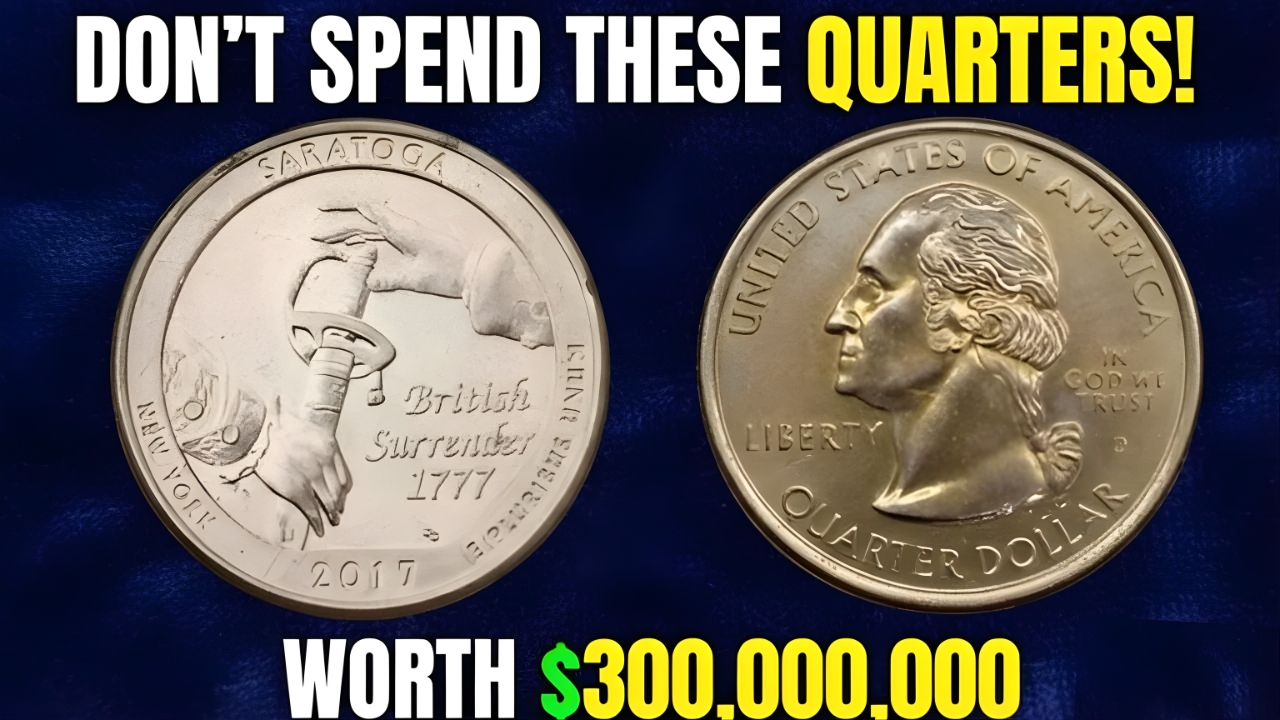
When the United States Mint introduced the 50 State Quarters Program in 1999, few people imagined that ordinary pocket change would one day spark serious collector demand. The program ran through 2008 and featured unique reverse designs representing each state in the order they joined the Union. Millions of Americans saved these quarters in maps and folders, making the series one of the most popular coin initiatives in modern history. Now in 2026, interest has shifted from simple collecting to serious value hunting, as certain state quarters have proven to be worth far more than twenty-five cents.
Although most state quarters remain common, a select group has become highly desirable due to mint errors, low mintages in top condition, or unusual production anomalies. Collectors across the country continue searching bank rolls and old collections, hoping to find one of these valuable coins hiding in plain sight.
The Birth of the State Quarter Era
The 50 State Quarters Program began with the release of the 1999 Delaware quarter, honoring Caesar Rodney’s historic ride. Over the next ten years, each state received its own distinctive design. The coins were struck for circulation at the Philadelphia and Denver mints, with proof versions produced in San Francisco.
The program’s success was unprecedented. Billions of coins were minted, and the hobby saw a surge in new participants. Families collected coins together, children learned about geography and history, and coin albums filled quickly. While the majority of these coins were preserved in average condition, very few were saved in perfect, high-grade states suitable for elite collections. That reality plays a major role in 2026 valuations.

Why Some State Quarters Are Worth Big Money
The value of a state quarter depends on several factors. Rarity is critical, but rarity can take many forms. Some coins are scarce because of mint errors, while others are valuable because few survive in pristine condition. A small production oversight during minting can transform an otherwise ordinary coin into a prized collectible.
Professional grading has also influenced the market. Coins certified in near-perfect condition command strong premiums because registry set collectors compete for the finest known examples. Even a common state quarter can be worth significant money if it receives an exceptionally high grade.
Another driver of demand is public awareness. High-profile auction results and online discussions have highlighted specific error varieties, encouraging collectors to search more carefully.
The 2004 Wisconsin Extra Leaf Quarter
One of the most famous and widely discussed state quarter errors is the 2004 Wisconsin issue featuring an extra leaf on the ear of corn. Two primary variations exist, often referred to as the high leaf and low leaf varieties. The added leaf appears to extend from the corn husk and was likely caused by die damage or alteration.
Although thousands may have entered circulation, strong examples in uncirculated condition are increasingly difficult to find. In 2026, high-grade specimens can bring impressive sums, especially when certified by reputable grading services. The visual clarity of the extra leaf makes this error easy to recognize, which has contributed to its lasting popularity.
The 2005 Minnesota Doubled Die Quarter
The 2005 Minnesota quarter is known for doubled die varieties that show extra tree outlines in the background of the design. Under magnification, collectors can see distinct doubling that creates the appearance of additional trees near the right side of the coin.
Not all examples exhibit strong doubling, and minor forms add little premium. However, the most dramatic doubled die versions remain highly sought after. High-grade coins with clearly visible doubling continue to perform well in the market. Collectors value these pieces for their subtle but unmistakable visual difference from normal strikes.
The 1999 Georgia Experimental Planchet Quarter
Another intriguing rarity involves certain 1999 Georgia quarters struck on experimental planchets. These coins were reportedly minted on special metal compositions being tested for future coinage. As a result, they differ slightly in color and weight compared to standard quarters.

Because these coins were never meant for general release, their presence in circulation surprised collectors. Only a limited number have been authenticated, making them rare and desirable. In 2026, examples verified as genuine experimental strikes can reach substantial values, depending on condition.
High-Grade 1999 Delaware Quarters
The first coin of the series, the 1999 Delaware quarter, remains common in circulated grades. However, coins graded at the very top of the scale are surprisingly scarce. The massive production numbers in 1999 did not guarantee flawless examples, as many coins were handled or stored improperly.

Registry set competition has driven up prices for near-perfect Delaware quarters in mint state grades. While not an error coin, its importance as the inaugural issue adds historical appeal. In top condition, it can sell for amounts that surprise those unfamiliar with grading nuances.
Off-Center and Struck-Through Errors
Beyond the widely known varieties, collectors also pursue dramatic mint errors such as off-center strikes and struck-through pieces. An off-center strike occurs when the blank is not properly aligned in the press, resulting in a partially missing design. If the date remains visible, these coins can command strong premiums.

Struck-through errors happen when debris interferes with the striking process, leaving unusual impressions on the surface. Each example is unique, adding to its appeal. While not tied to a specific state, such errors within the state quarter series attract attention due to the program’s popularity.
The Role of Condition in 2026 Values
Condition remains one of the most important factors in determining value. Circulated state quarters with minor wear are generally worth face value unless they display a major error. However, coins in exceptional mint state condition, especially those graded at the highest levels, can bring surprising prices.

Collectors seeking to build top-ranked sets compete for the finest known examples. Even slight differences in luster, strike sharpness, and surface preservation can affect grade and price. This competition has elevated certain otherwise common coins into the realm of significant collectibles.
Are Valuable State Quarters Still in Circulation
Although many valuable examples have already been discovered, the possibility of finding one in circulation still exists. Bank rolls, old coin jars, and inherited collections occasionally yield overlooked treasures. Careful examination is essential, particularly when searching for known error varieties.

Collectors should handle coins by their edges and avoid cleaning them. Cleaning can damage surfaces and drastically reduce value. If a coin appears unusual or promising, professional evaluation is recommended to confirm authenticity and determine grade.
Why State Quarters Continue to Fascinate Collectors
The state quarter series combines accessibility with historical variety. Each design reflects regional pride and unique cultural elements. This broad appeal ensures continued interest from both casual collectors and serious numismatists.
As the program moves further into history, nostalgia also plays a role. Adults who collected the coins as children now revisit the series with greater knowledge and financial means. That renewed interest has helped sustain demand in 2026.
Final Verdict
State quarters worth big money in 2026 prove that modern coins can achieve impressive value under the right circumstances. From the famous Wisconsin extra leaf error to high-grade early issues and experimental planchet rarities, the series offers exciting opportunities for collectors.
While most state quarters remain common, careful searching and knowledge of key varieties can reveal coins worth far more than their face value. The enduring popularity of the program ensures that these rare examples will remain in demand for years to come.
Disclaimer
Coin values fluctuate based on rarity, condition, certification, and market demand. Prices mentioned in this article reflect trends observed in 2026 and may change over time. Readers should consult professional numismatic experts before making purchasing or selling decisions.