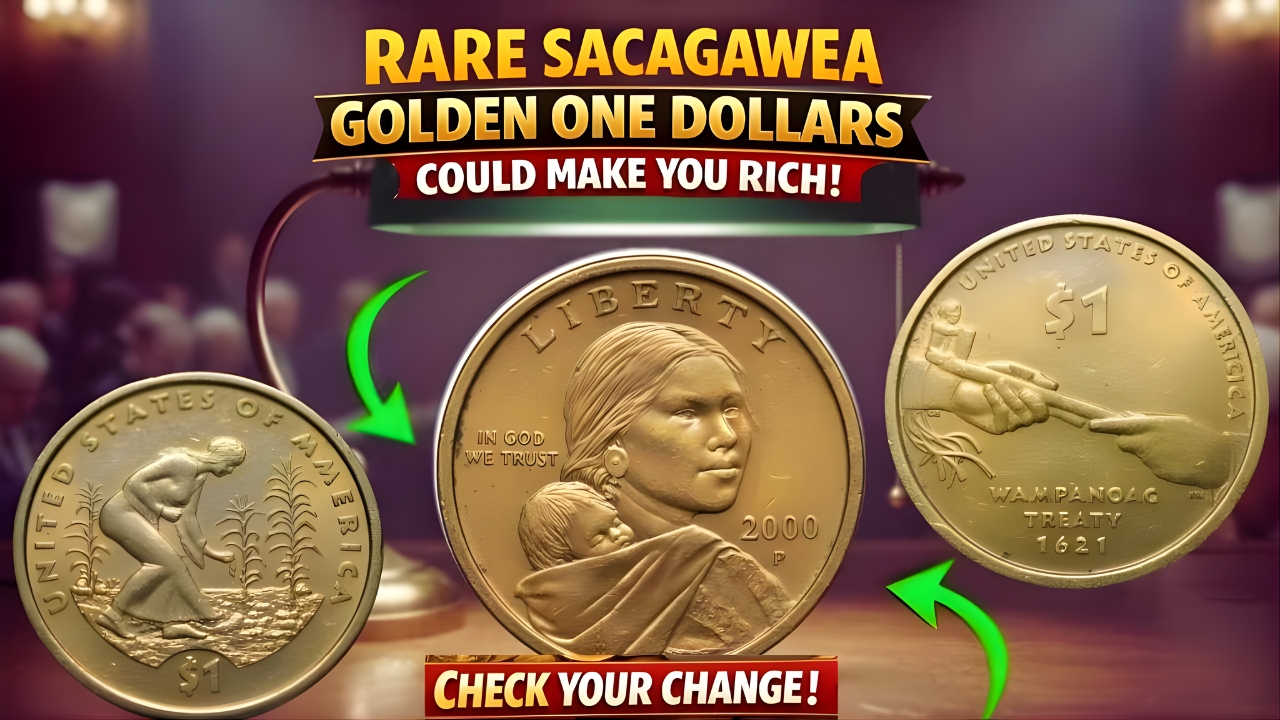
When the Sacagawea Golden Dollar was first introduced in 2000, it was intended to reinvigorate interest in dollar coins across the United States. Featuring the Shoshone woman Sacagawea carrying her infant son Jean Baptiste, the coin quickly stood out for both its historical tribute and its distinctive golden color. Though millions were produced and most circulate at face value, certain rare examples have captured the attention of collectors and sold for thousands of dollars.
Many people assume modern coins cannot be worth serious money because they are too recent. However, rarity does not always come from age alone. It can result from minting errors, unusual finishes, limited releases, or unexpected production quirks. In the case of Sacagawea dollars, several unique variations have proven that even a coin barely two decades old can command impressive sums.

A Brief History of the Sacagawea Dollar
The Sacagawea dollar replaced the Susan B. Anthony dollar, which had struggled in circulation due to its similarity in size and color to the quarter. To avoid repeating that problem, the United States Mint created a new dollar coin with a manganese-brass clad composition, giving it a warm golden hue. The obverse design honors Sacagawea, who played a crucial role in the Lewis and Clark expedition, while the reverse initially featured a soaring eagle.
Beginning in 2009, the reverse design changed annually under the Native American $1 Coin Program, celebrating the contributions of Native Americans throughout history. While the majority of these coins are common, specific early issues and rare varieties stand apart from the rest.
The 2000-P “Cheerios” Sacagawea Dollar
One of the most famous and valuable Sacagawea dollars is known as the Cheerios dollar. In early 2000, the Mint partnered with a popular cereal brand to promote the new coin. Special 2000-P Sacagawea dollars were inserted into cereal boxes as part of a marketing campaign. At first glance, these coins appear ordinary, but a small detail makes them exceptional.
Certain Cheerios dollars feature enhanced tail feathers on the eagle reverse, displaying sharper and more detailed lines than standard circulation strikes. Only a limited number of these enhanced reverse coins were distributed before the design was subtly modified for general production.
Collectors quickly realized the significance of this difference. High-grade authenticated examples have sold for several thousand dollars, with the finest specimens bringing even higher prices at auction. Because these coins entered circulation through cereal boxes, there is always a slim possibility that one could be discovered in an old collection or forgotten stash.
The 2000-P Sacagawea Dollar with Mule Error
Another legendary rarity is the 2000-P mule error. In numismatic terms, a mule occurs when two dies that were never meant to be paired are accidentally used together. In this extraordinary case, a Sacagawea dollar obverse was mistakenly struck with the reverse of a Washington quarter.

The result is a one-dollar coin bearing Sacagawea on the front and the familiar eagle design of the quarter on the back. This dramatic mismatch makes the coin instantly recognizable. Only a handful of genuine examples are known to exist.
Because of its extreme rarity and the clear visual evidence of the error, the mule Sacagawea dollar has achieved iconic status. Verified specimens have sold for tens of thousands of dollars. Although the chances of finding one are incredibly small, stories of rare error coins being discovered years after production keep collectors hopeful.

High-Grade 2000-P and 2000-D Circulation Strikes
Even standard 2000-P and 2000-D Sacagawea dollars can carry significant value in exceptional condition. While millions were minted, most entered circulation and developed wear. Perfectly preserved examples with sharp details, original luster, and no surface marks are far less common than the mintage figures suggest.
Coins graded at the highest levels by professional grading services can command prices in the thousands. This is especially true for coins that display strong strikes and minimal contact marks. The difference between an ordinary circulated dollar and a top-tier mint state example can mean the difference between one dollar and several thousand.
Collectors searching through bank rolls or old coin jars occasionally uncover surprisingly well-preserved pieces. Careful handling and professional grading are essential if a coin appears to be in outstanding condition.
Sacagawea Dollars with Rare Errors
Beyond the well-known mule and Cheerios varieties, other error coins can also bring strong premiums. Off-center strikes, double dies, clipped planchets, and other minting mistakes have been documented within the Sacagawea series.
While many minor errors are worth modest premiums, dramatic and visually striking mistakes are far more valuable. The key factors influencing value include the severity of the error, overall eye appeal, and condition. A significant error in high grade can easily sell for hundreds or even thousands of dollars, depending on demand.
Collectors value error coins because they represent unique moments in the minting process. Each mistake tells a story about how coins are produced and how even modern quality controls are not flawless.
The Importance of Condition and Authentication
One of the most critical aspects of determining a Sacagawea dollar’s value is its condition. Coins that have been heavily circulated typically show scratches, dull surfaces, and worn details. In contrast, coins that have been carefully stored may retain their original shine and crisp design features.
Professional grading services evaluate coins on a numerical scale, assessing factors such as surface preservation, strike quality, and overall appearance. A difference of even one or two grading points can significantly impact a coin’s market value.
Authentication is equally important, especially for high-value varieties like the mule error or Cheerios reverse. Counterfeit coins exist, and only expert examination can confirm a coin’s legitimacy. Anyone who suspects they may have a rare Sacagawea dollar should consider consulting a reputable professional for evaluation.
Could Valuable Sacagawea Dollars Still Be in Circulation?
Although many rare varieties are known and documented, it is not impossible for undiscovered examples to remain in private hands. Coins distributed through promotions, stored in drawers, or forgotten in collections sometimes resurface years later.
The Sacagawea dollar remains in circulation, and millions of Americans encounter them through banks, vending machines, and change transactions. While most will be worth only face value, the excitement lies in the small chance that a rare variety could appear unexpectedly.
Searching through coin rolls or examining loose change carefully may seem tedious, but it has led to remarkable finds in the past. Even if a million-dollar rarity is unlikely, uncovering a coin worth several thousand dollars is enough to inspire many collectors to keep looking.
Final Verdict
Sacagawea Golden Dollars may appear ordinary at first glance, but certain rare varieties and high-grade examples have proven they can be worth thousands of dollars. From the elusive Cheerios enhanced reverse to the extraordinary mule error, these coins demonstrate that modern issues can achieve remarkable value under the right circumstances. While most Sacagawea dollars remain worth just one dollar, careful inspection and a bit of luck could reveal a hidden treasure in your change.
Disclaimer
Coin values mentioned in this article are based on past sales, collector demand, and market trends. Actual values vary depending on condition, authenticity, grading, and current market conditions. Readers should seek professional evaluation before buying or selling potentially valuable coins.