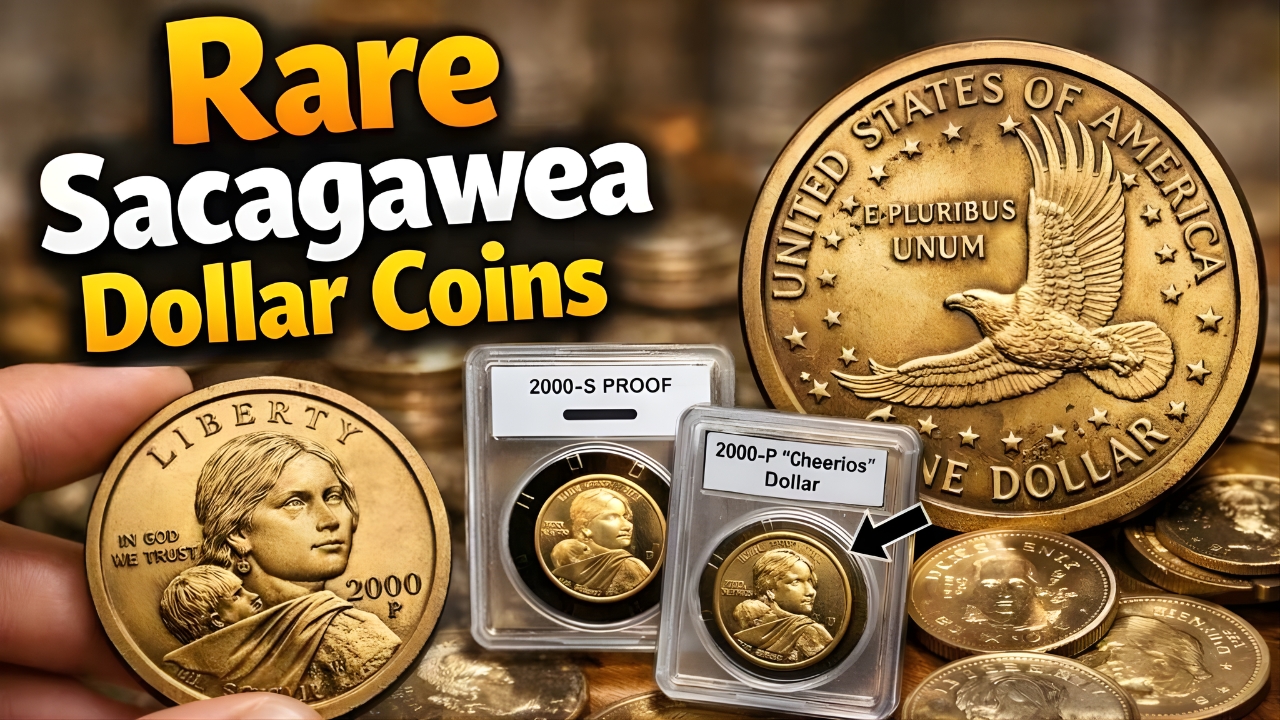
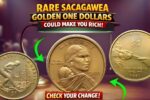
When the Sacagawea dollar debuted in 2000, it was introduced as a bold redesign of the American one-dollar coin. Featuring the portrait of Sacagawea carrying her infant son, the coin honored the Shoshone woman who played a crucial role in the Lewis and Clark expedition. Although intended for everyday circulation, the golden-colored dollar quickly became a favorite among collectors. Over time, certain dates, mint varieties, and rare errors transformed ordinary one-dollar coins into highly desirable treasures. By 2026, some Sacagawea dollars have reached values in the thousands, surprising even seasoned numismatists.
The appeal of the Sacagawea dollar lies not only in its historical symbolism but also in the unique circumstances surrounding its production. From experimental alloys to limited mintages and unexpected die varieties, the series offers collectors numerous opportunities to discover hidden value.

The 2000-P Cheerios Dollar
One of the most famous rarities in the series is the 2000-P Cheerios dollar. In early 2000, a promotional partnership placed special Sacagawea dollars inside cereal boxes to encourage public interest in the new coin. What collectors later discovered was that some of these promotional coins featured a distinct reverse design with enhanced tail feather details on the eagle.
Only a limited number of these enhanced reverse coins were distributed before the design was modified for mass production. As awareness spread, demand surged. High-grade examples certified in pristine condition have sold for thousands of dollars, making this one of the most sought-after modern dollar coins.

The 2000-P Wounded Eagle Error
Another highly valuable variety from the first year of issue is the so-called Wounded Eagle error. This coin displays a die gouge that runs across the eagle’s belly on the reverse, giving the appearance of a wound. The error occurred during the minting process and was not widely distributed.
Because the error is dramatic and easily recognizable, collectors have aggressively pursued examples in excellent condition. Values can climb into the thousands for coins that retain sharp detail and original luster.
The 2000-P Mule Error
Few modern coins generate as much excitement as a true mule error, and the Sacagawea series delivered one in remarkable fashion. A small number of 2000-dated Sacagawea dollars were mistakenly struck with the obverse of a Washington quarter. This pairing of mismatched dies created a coin that should never have existed.
The rarity and dramatic nature of the mistake immediately elevated its status. Examples that have surfaced at auction have brought substantial five-figure prices, placing them among the most valuable modern U.S. coins ever discovered.

The 2001-D Double Die Obverse
Double die errors occur when a coin’s design is impressed more than once at slightly different angles during die creation. In 2001, a small number of Denver-minted Sacagawea dollars displayed visible doubling in the lettering and date. Collectors who recognize this subtle but legitimate variety can secure a coin that carries a premium well beyond face value.
Although not as rare as the mule error, top-condition examples of the 2001-D double die have achieved impressive sales figures when certified at high grades.
The 2005-P Speared Bison
In 2005, the reverse of the Sacagawea dollar changed to feature a bison as part of the Native American series. Some Philadelphia-minted coins from that year exhibit a die gouge that appears to spear the bison through its midsection. The visual impact of the error quickly captured collector interest.
Because the flaw is both dramatic and distinctive, coins in mint state condition command strong premiums. Well-preserved examples can be worth hundreds or even thousands, depending on quality and demand.

Satin Finish Special Mint Set Coins
Between 2005 and 2010, special satin finish coins were produced for mint sets rather than regular circulation. These coins display a smoother, more refined surface texture compared to standard strikes. While mintages were not extremely low, the coins were carefully handled and often preserved in superior condition.
Collectors assembling complete high-grade sets of Sacagawea dollars place particular emphasis on these satin finish issues. Perfectly graded examples can achieve prices far above typical circulation strikes.

Low Mintage Native American Issues
Each year after 2009, the reverse design of the Sacagawea dollar changed to highlight Native American contributions to U.S. history. Some of these later issues were produced in relatively modest numbers compared to earlier years. While they may still be found at face value, uncirculated rolls and high-grade certified coins have begun to appreciate steadily.
As interest in modern commemorative themes grows, certain low-mintage dates from the Native American series have emerged as sleepers in the market. Coins preserved in flawless condition have brought surprising prices at auction.
High-Grade Registry Set Coins
Beyond specific errors and varieties, condition rarity drives much of the value in the Sacagawea dollar series. Many coins were struck in large numbers, but few survived in pristine mint state without contact marks or surface blemishes. Registry set collectors compete for the finest graded examples, often pushing prices far beyond expectations.
A coin graded at the very top of the scale, especially if population reports show only a handful of comparable pieces, can sell for thousands. This phenomenon underscores the importance of careful preservation and professional grading.

Transitional Planchet Errors
Occasionally, coins are struck on the wrong planchet due to production mix-ups. Sacagawea dollars struck on experimental or incorrect metal blanks are exceptionally rare. When authenticated, these pieces command significant attention from error specialists.
The combination of scarcity, authenticity, and historical curiosity makes transitional planchet errors some of the most intriguing modern coin finds. Values vary depending on condition and documentation, but many have reached substantial sums.
Proof Coins with Deep Cameo Contrast
Proof Sacagawea dollars were struck for collectors and feature mirror-like fields with frosted design elements. Some proofs exhibit particularly strong contrast, known as deep cameo. Coins with this visual appeal and perfect preservation are highly prized.
While many proof coins were saved carefully, only a small percentage achieve flawless grades. These elite examples often command premiums that elevate them into the thousands, especially for early years.
The Impact of Silver and Experimental Strikes
Although standard Sacagawea dollars are composed of a manganese-brass clad alloy, a limited number of experimental pieces were struck in alternative metals during testing phases. These coins were not released to the public but occasionally appear in private hands.
When such experimental strikes surface, they attract intense bidding due to their rarity and historical significance. Collectors value them as tangible evidence of the Mint’s developmental process.
Growing Popularity Among Younger Collectors
By 2026, interest in modern coins has expanded significantly. Younger collectors, drawn by accessible price points and visually appealing designs, have embraced the Sacagawea series. Social media and online marketplaces have increased awareness of rare varieties, driving competition for key dates and errors.
This renewed enthusiasm has pushed certain coins into higher price brackets. As demand continues to grow, top-condition and error examples remain strong performers in the market.
How to Identify a Valuable Sacagawea Dollar
Collectors seeking valuable examples should begin by examining the coin’s date and mint mark. Close inspection of the reverse design can reveal distinctive errors such as die gouges or doubling. Surface quality is equally critical, as pristine luster and minimal marks dramatically enhance value.
Professional grading offers added security, particularly for coins that appear to be rare varieties. Certification provides authenticity verification and assigns an official grade that influences market price.
Patience and knowledge are essential. Many valuable coins have been discovered in rolls obtained from banks or inherited collections, demonstrating that hidden treasures still exist.
Final Verdict
The Sacagawea dollar series has evolved from a circulating commemorative coin into a dynamic field of modern collecting. From the famed Cheerios variety and mule error to subtle doubled dies and flawless registry set specimens, certain coins have reached values in the thousands.
While most Sacagawea dollars remain worth only face value, rare varieties, low-mintage issues, and top-grade examples continue to command strong prices in 2026. Careful examination and proper authentication can turn an ordinary dollar into a remarkable find.
Disclaimer
Coin values fluctuate based on market demand, condition, and authentication standards. The prices referenced in this article reflect historical trends and collector interest as of 2026. Actual sale amounts may vary. Individuals should seek professional evaluation before making any purchase or sale decisions regarding collectible coins.