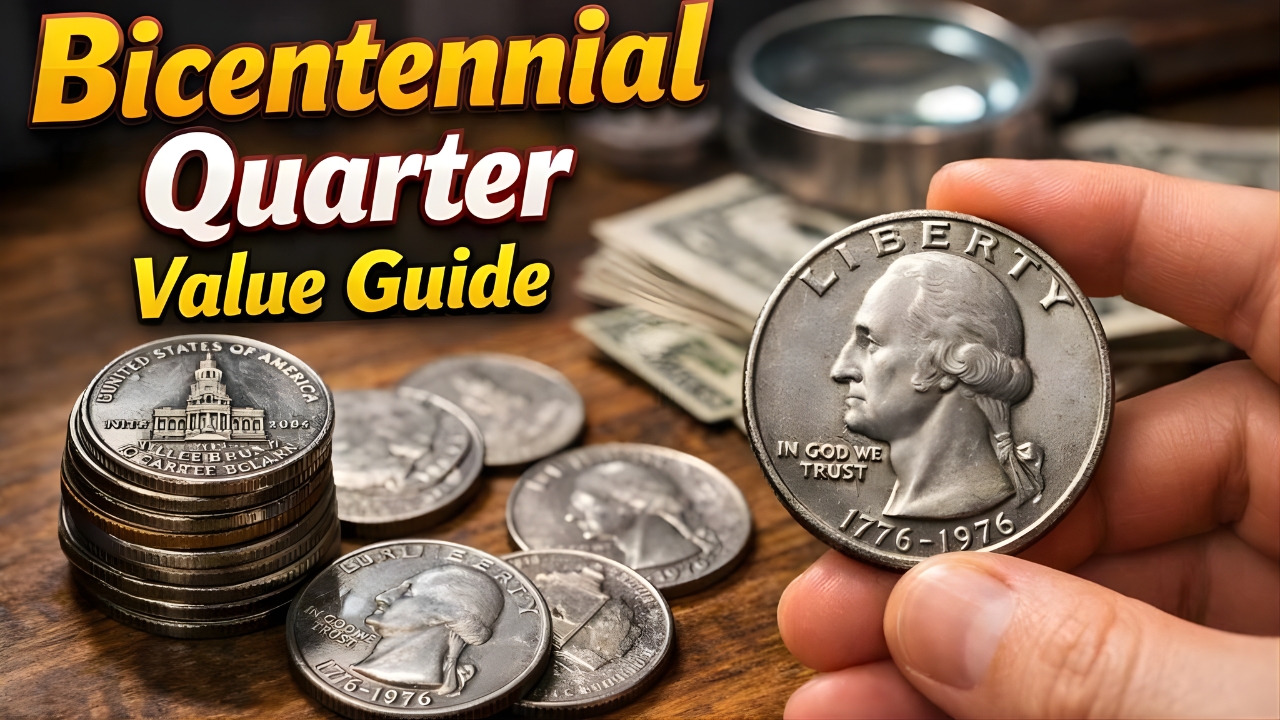
In 1976, the United States celebrated 200 years of independence, and the occasion inspired one of the most recognizable commemorative coin designs in modern American history. The Bicentennial Quarter, dated 1776–1976, was issued to honor the nation’s founding and quickly became a patriotic keepsake for millions of Americans. Nearly five decades later, collectors in 2026 are still hunting for hidden examples that carry significant premiums over face value.
Produced by the United States Mint, the Bicentennial Quarter replaced the standard reverse design for a limited time. Instead of the familiar eagle, the reverse features a colonial drummer boy with a torch encircled by thirteen stars, representing the original colonies. The obverse retained George Washington’s portrait but included the dual date 1776–1976, making it instantly recognizable.

Although hundreds of millions were struck, certain variations, silver issues, and high-grade examples have become highly desirable among collectors and investors. Understanding what separates a common quarter from a valuable one is the key to identifying hidden treasures.
Bicentennial Quarter Designs and Variations
The Bicentennial Quarter was minted in both clad and silver compositions. The standard circulation coins were struck in a copper-nickel clad format similar to modern quarters. These were produced in large numbers at the Philadelphia and Denver mints.

In addition to circulation pieces, the Mint issued special 40 percent silver versions for collectors. These were not intended for everyday commerce but were sold in proof and uncirculated sets. Silver examples can be distinguished by their weight, edge appearance, and sometimes by a distinctive shine that differs from clad coins.
Mint marks play an important role in determining value. Coins from Philadelphia in 1976 carried no mint mark, while Denver pieces displayed a D. San Francisco issues, often proof strikes, featured an S mint mark and included both clad and silver compositions. While most mint mark combinations remain common, certain high-grade or deep cameo proofs command impressive premiums.

Mintage Numbers and Market Reality
At first glance, the Bicentennial Quarter may not seem rare. The combined mintage across all facilities exceeded 1.6 billion coins, making it one of the most heavily produced commemorative designs in U.S. history. Because of this, the majority of circulated examples remain worth only 25 cents in 2026.
However, rarity in coin collecting is not solely about mintage. Condition rarity, special finishes, and production errors can transform an otherwise common coin into a valuable collectible. High-grade coins certified in near-perfect condition are far less common than the raw mintage numbers suggest.

Collectors often compete for coins graded at the highest levels. A Bicentennial Quarter graded at the top of the scale, with full luster and no visible imperfections, can sell for hundreds or even thousands of dollars, depending on demand.
Silver Bicentennial Quarters: A Premium Category
The 40 percent silver Bicentennial Quarters represent a distinct category within the series. While not exceedingly rare, they carry intrinsic metal value in addition to collectible appeal. Silver coins were primarily sold in special sets, and many remain preserved in original packaging.

In 2026, silver market fluctuations influence the base value of these coins. Even in average condition, a silver Bicentennial Quarter is worth more than its face value due to its precious metal content. Proof versions with deep mirrored surfaces and frosted design elements can command even higher premiums, especially when certified in pristine condition.
Collectors searching for silver examples should examine the coin’s edge. Clad quarters show a visible copper stripe along the edge, while silver coins have a more uniform metallic appearance.
Rare Errors That Drive Big Prices
Error coins often generate the strongest collector interest. Bicentennial Quarters with off-center strikes, double dies, or missing clad layers have been discovered over the years. These minting anomalies occurred during production and escaped into circulation.
Double die errors, where lettering or design elements appear slightly duplicated, are particularly desirable. Although dramatic examples are rare, even subtle doubling can increase value if confirmed by experts.

Clipped planchets, where a portion of the coin’s edge is missing due to a blanking error, also attract attention. Such coins are visually striking and highly collectible when authenticated.
Another notable variety includes quarters struck on the wrong planchet. In rare cases, coins intended for other denominations were accidentally struck with the Bicentennial Quarter design, resulting in unusual weight or appearance. These off-metal strikes are among the most valuable finds in the series.

Condition and Grading in 2026
Condition remains the single most important factor influencing value. Coins are graded on a scale that evaluates wear, luster, strike quality, and surface preservation. Circulated coins showing heavy wear typically carry minimal premiums unless they feature a rare error.
Mint state examples with sharp details and original luster are far more desirable. Proof coins are judged by clarity, mirror finish, and cameo contrast. In top grades, competition among registry collectors can push prices to surprising levels.

In 2026, professional third-party grading services play a major role in determining market value. Certified coins often command higher prices because they provide assurance of authenticity and condition.
Bicentennial Quarters Still in Circulation
Despite their age, Bicentennial Quarters occasionally appear in everyday transactions. Many were saved as souvenirs, but countless others circulated widely and remain mixed with regular quarters.

The possibility of finding a valuable example in pocket change continues to excite collectors. While the odds of discovering a high-grade or rare error coin are slim, they are not zero. Careful inspection of dates, mint marks, and unusual features can occasionally reveal a worthwhile find.
Collectors often search through bank rolls or inherited coin jars, hoping to uncover overlooked gems. Even if most finds are common, the process itself keeps interest in the series alive.
Investment Perspective in 2026
From an investment standpoint, Bicentennial Quarters occupy a unique position. Common circulated coins do not offer significant appreciation potential. However, certified high-grade examples, rare errors, and silver proofs can perform well over time.
As interest in tangible assets grows, commemorative coins linked to historic milestones continue to attract attention. The Bicentennial Quarter’s association with America’s 200th anniversary gives it enduring appeal.
Investors should focus on quality over quantity. Rather than accumulating large numbers of average coins, targeting scarce varieties and top-condition examples offers stronger long-term potential.
How to Identify Hidden Value
Determining whether a Bicentennial Quarter carries premium value involves several steps. First, check the mint mark and overall condition. Look for unusual doubling in the lettering or drummer design. Examine the edge for silver composition.
Weighing the coin can help confirm metal content. Silver versions weigh slightly more than clad pieces. Magnification tools assist in spotting subtle errors that may not be visible to the naked eye.
If a coin appears unusual or exceptionally well preserved, professional evaluation is recommended. Authentication protects both buyers and sellers and ensures accurate grading.
The Lasting Legacy of the Bicentennial Quarter
Nearly fifty years after its release, the Bicentennial Quarter remains a symbol of American pride and numismatic history. While most examples are common, the series offers enough variety and intrigue to keep collectors engaged.
The blend of patriotic design, multiple compositions, and occasional mint errors creates opportunities for discovery. For new collectors, the coin provides an accessible entry point into the hobby. For experienced investors, rare high-grade pieces offer strategic potential.
Final Verdict
The Bicentennial Quarter Value Guide 2026 highlights a simple truth: not all 1776–1976 quarters are created equal. While the majority remain worth face value, select silver issues, rare mint errors, and top-grade certified examples can command impressive premiums. Careful examination and professional authentication are essential for identifying hidden gems. For collectors willing to look closely, this iconic commemorative coin still holds the potential for surprising value.
Disclaimer
Coin values fluctuate based on market conditions, collector demand, precious metal prices, and grading standards. The information provided here reflects general market trends in 2026 and does not guarantee specific outcomes. Individuals should seek professional evaluation before making purchasing or selling decisions regarding collectible coins.