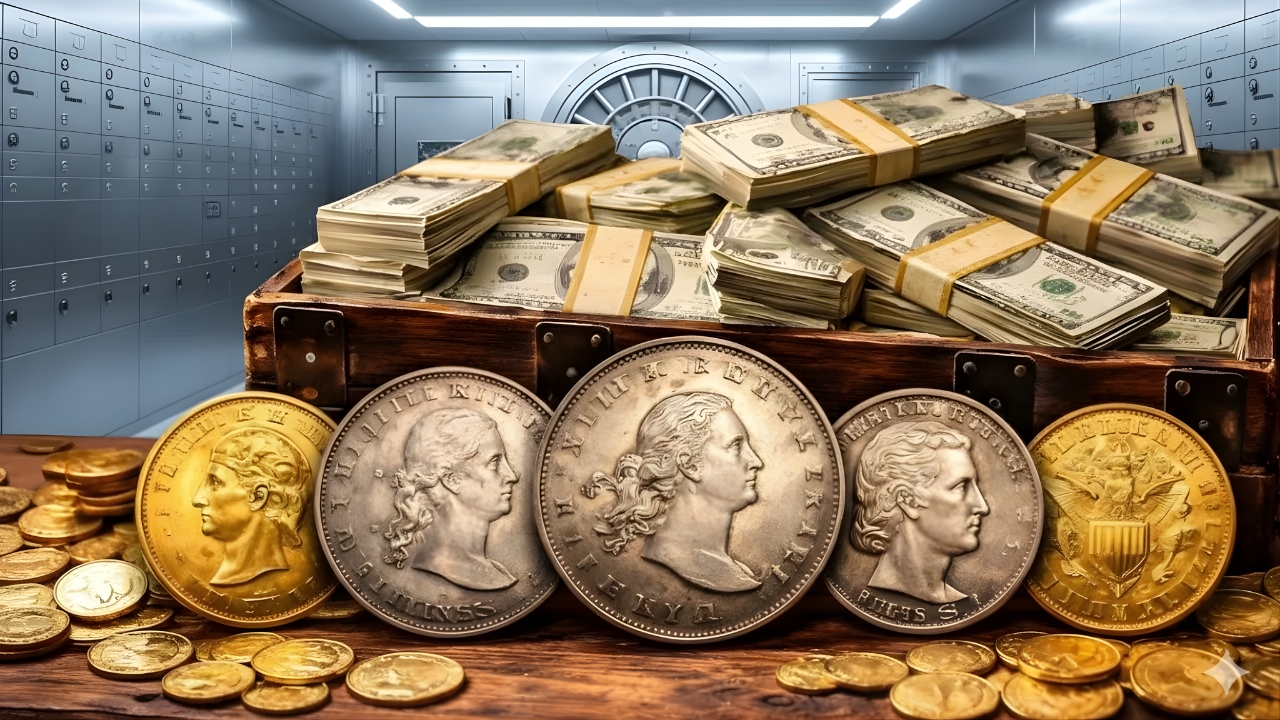
The rare coin market has produced some astonishing headlines over the past few decades, but nothing captures public imagination quite like American coins worth millions of dollars. While most coins pass through hands unnoticed, a tiny number have become legendary treasures valued at 25 million dollars and beyond. These extraordinary pieces represent a combination of rarity, history, artistry, and intense collector demand. Their stories are not just about money but about survival, mystery, and the evolution of the United States itself.
For serious collectors, these coins stand at the summit of numismatics. They are pursued by museums, elite private buyers, and investors who understand that true rarity cannot be manufactured. When one of these coins appears at auction, the event becomes global news, drawing bidders from around the world.
The 1933 Double Eagle and the Legal Battle That Made History
Few coins have achieved the fame of the 1933 Double Eagle. Officially a twenty-dollar gold piece, the 1933 Double Eagle was never legally released into circulation due to President Franklin D. Roosevelt’s order ending the gold standard during the Great Depression. Nearly all examples were melted before distribution, but a handful mysteriously escaped destruction.
For decades, ownership of these coins was the subject of legal disputes between private collectors and the United States government. One specimen, eventually declared legal to own after a special agreement, sold at auction for a record-breaking sum exceeding 18 million dollars, including buyer’s fees. Subsequent private transactions and shifting market conditions have fueled speculation that similar examples could command values approaching or exceeding 25 million dollars in the right circumstances.

The 1933 Double Eagle’s value lies not only in its rarity but also in the drama surrounding its survival. It represents a turning point in American monetary history and remains one of the most recognized coins in the world.
The 1794 Flowing Hair Silver Dollar
Considered by many historians to be the first silver dollar struck by the United States Mint, the 1794 Flowing Hair Silver Dollar holds a special place in American numismatics. Featuring a portrait of Liberty with flowing hair on the obverse and an eagle on the reverse, this coin symbolizes the young nation’s ambition and independence.
Only a limited number were minted in 1794, and even fewer survive in high condition. One extraordinary example, believed by some experts to be among the very first struck, sold for over 10 million dollars at auction. Given its historical significance and the increasing appetite for trophy coins, analysts suggest that a superior specimen offered in a competitive market environment could potentially approach the 25 million dollar mark.
Collectors value this coin not just as currency but as a tangible link to the earliest days of the federal minting system. Its survival through more than two centuries adds to its mystique.
The 1913 Liberty Head Nickel
Another coin surrounded by intrigue is the 1913 Liberty Head Nickel. Officially, the Liberty Head design was replaced in 1913 by the Buffalo Nickel, yet five examples dated 1913 bearing the old Liberty design somehow came into existence. Their origin remains partly mysterious, and it is widely believed they were struck unofficially.
Only five specimens are known, each with its own documented chain of ownership. Over the years, these nickels have appeared in major auctions, often fetching multi-million-dollar prices. One example sold for more than 4 million dollars, and market enthusiasm continues to grow.
The combination of extreme rarity, mystery, and the romance of early twentieth-century collecting has elevated the 1913 Liberty Head Nickel to legendary status. With so few examples available, competitive bidding could easily push future sales toward unprecedented levels.
The Brasher Doubloon and America’s Colonial Legacy
Long before the establishment of the United States Mint, gold coins circulated in colonial America. Among the most celebrated is the Brasher Doubloon, created by goldsmith Ephraim Brasher in 1787. Struck in gold and bearing Brasher’s distinctive punch mark, these coins are among the earliest examples of American gold coinage.

Only a handful survive today. One specimen sold for more than 9 million dollars, reflecting its immense historical importance and rarity. As interest in early American artifacts grows, coins like the Brasher Doubloon continue to attract attention from elite collectors who view them as cornerstones of American history.
Its value stems from its status as a pre-federal issue and its connection to New York’s early economic life. For many collectors, owning such a piece represents possession of a foundational chapter in the nation’s story.

Why Certain Coins Reach 25 Million Dollars and Beyond
Not every old coin becomes a multimillion-dollar treasure. Several factors must align for a coin to achieve extraordinary value. Rarity is the most critical element. Coins with extremely low survival numbers naturally command higher prices, particularly when demand is global.
Historical significance also plays a major role. Coins linked to pivotal events, policy changes, or early national development tend to attract intense interest. The 1933 Double Eagle’s connection to the end of the gold standard is a prime example.

Condition further influences value. High-grade examples with exceptional preservation and eye appeal are especially desirable. In the world of elite coin collecting, even slight differences in quality can translate into millions of dollars.
Finally, provenance adds prestige. Coins that have belonged to famous collections or have well-documented histories often generate greater excitement at auction.

The Impact on the Modern Coin Market
Record-breaking sales of rare American coins have a ripple effect throughout the hobby. When a coin approaches or surpasses 25 million dollars in perceived value, media coverage draws new attention to numismatics. Casual observers become curious, and some begin exploring their own collections.
Auction houses benefit from increased participation, and even more modest coins can see rising demand as interest spreads. While most collectors will never own a multimillion-dollar rarity, the excitement generated by such sales helps sustain enthusiasm across all levels of the market.

At the same time, these headline-grabbing prices highlight the importance of authentication and professional grading. Buyers investing millions require assurance of legitimacy, and the rare coin industry has developed rigorous standards to meet that need.
Could Another Coin Break the 25 Million Dollar Barrier
As global wealth expands and competition among top-tier collectors intensifies, the possibility of a coin exceeding 25 million dollars becomes increasingly plausible. If a uniquely significant specimen with impeccable condition and strong provenance were to appear at auction, bidding could reach unprecedented heights.
The rarity of opportunities fuels anticipation. Many of the most valuable American coins are tightly held in private collections and rarely come to market. When one does surface, it creates a moment of intense excitement that can reshape price expectations for the entire field.
Final Verdict
Rare American coins valued at 25 million dollars and beyond represent the pinnacle of numismatic achievement. From the dramatic history of the 1933 Double Eagle to the foundational importance of the 1794 Flowing Hair Silver Dollar and the mystique of the 1913 Liberty Head Nickel, these treasures embody the intersection of art, history, and scarcity.
While only a select few collectors will ever compete for such prizes, their stories continue to captivate audiences worldwide and elevate the profile of coin collecting as both a passion and an investment.
Disclaimer
Coin values fluctuate based on market demand, rarity, condition, and economic factors. Reported prices reflect past sales and market speculation and may change over time. Readers should seek professional advice before making any significant numismatic investment decisions.