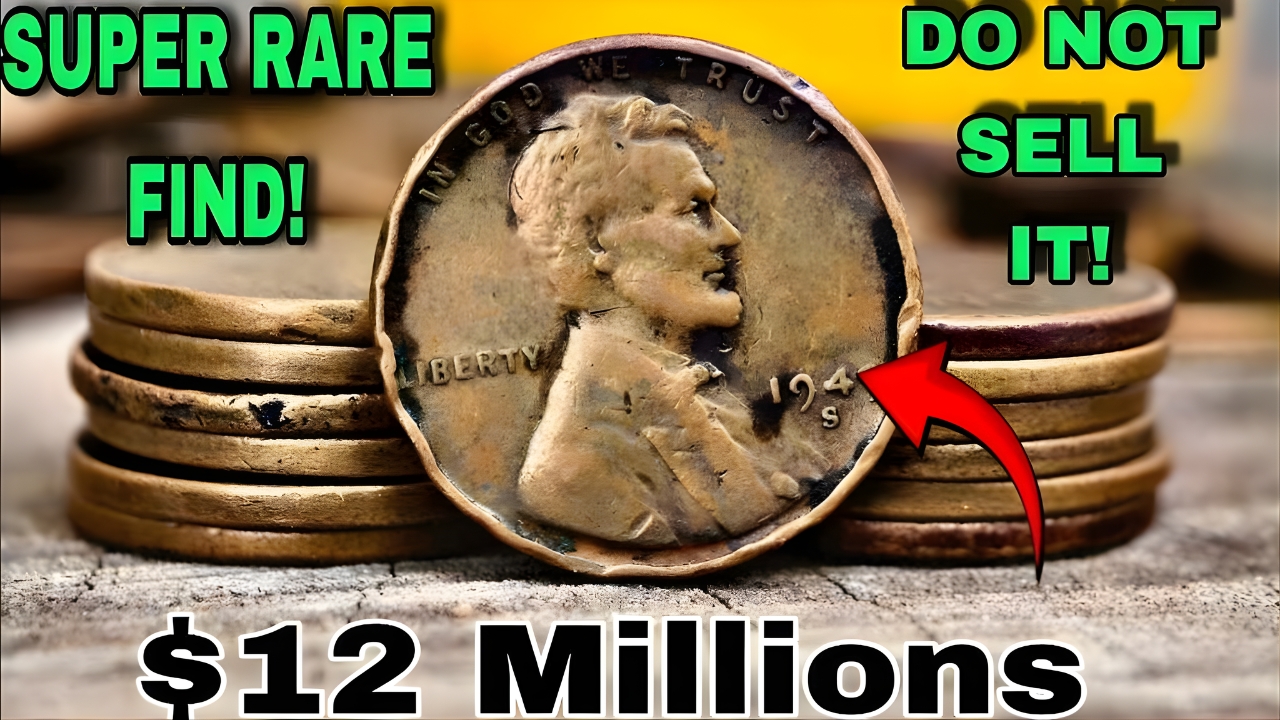
The year 1944 marked an important transition period in American coinage. During World War II, the United States Mint had shifted penny production to zinc-coated steel in 1943 to conserve copper for wartime needs. By 1944, the Mint returned to using a copper alloy composed largely of recycled shell casings from military ammunition. These coins, known as Wheat Pennies because of the wheat stalks on the reverse, were struck in enormous numbers. Yet despite their high mintage, certain 1944 Lincoln cents have become prized treasures worth thousands of dollars.
Most 1944 pennies are common and trade for only a small premium over face value in circulated condition. However, rare mint errors, unusual compositions, and exceptional preservation can dramatically increase their value. Collectors continue to search through rolls, jars, and inherited collections in hopes of finding one of the scarce varieties that command strong prices.

A Quick Look at the 1944 Lincoln Wheat Cent
The Lincoln Wheat Cent, first introduced in 1909, features the portrait of President Abraham Lincoln on the obverse and two stylized wheat stalks on the reverse. In 1944, pennies were minted at three primary facilities: Philadelphia, Denver, and San Francisco. Coins from Philadelphia carry no mint mark, while those from Denver display a D and those from San Francisco feature an S.
Billions of 1944 cents were struck across these mints, but the story becomes far more interesting when examining errors and special circumstances surrounding production. Small differences in metal composition or die preparation have created coins that collectors now value in the thousands.
1944 Steel Wheat Penny
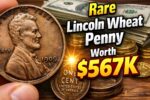
One of the most famous rarities in American coinage is the 1944 steel cent. Although steel planchets were officially used only in 1943, a tiny number were accidentally struck in 1944 using leftover steel blanks. These coins resemble the 1943 steel cent in color, displaying a silver-gray appearance rather than the familiar copper tone.
Only a limited number of authentic 1944 steel cents are known to exist from all three mints. Because of their accidental origin and extreme scarcity, they are considered major rarities. Even in worn condition, genuine examples have sold for tens of thousands of dollars, while higher-grade specimens can bring far more.
Collectors should be cautious, as altered coins exist. Some individuals plate copper cents to mimic steel or modify dates. Authentic 1944 steel cents are magnetic due to their steel composition, and professional authentication is essential.
1944-S Steel Wheat Penny
Among the rare steel varieties, the 1944-S steel cent stands out as especially scarce. Produced at the San Francisco Mint, this version combines the accidental use of steel planchets with a lower regional mintage compared to Philadelphia.

Only a few confirmed examples have surfaced over the decades. Because of its rarity and the desirability of San Francisco mint issues, the 1944-S steel cent has achieved legendary status among collectors. When offered at auction, these coins attract intense bidding competition and can reach astonishing prices.
The combination of wartime history, mint error status, and extreme scarcity makes this coin one of the most valuable Lincoln cents ever produced.
1944-D Steel Wheat Penny
The Denver Mint also inadvertently struck a small number of steel cents in 1944. Like the San Francisco version, the 1944-D steel cent is exceedingly rare. Its value reflects both its limited survival rate and the strong demand for Denver Mint error coins.
Because so few genuine pieces exist, every newly discovered example generates significant excitement in the numismatic community. Even heavily worn specimens command substantial sums, while coins in better condition can reach impressive five-figure territory.
Collectors examining 1944-D cents should look carefully at color and magnetism. A true steel cent will appear silver rather than copper and will respond to a magnet. Professional grading remains crucial before assuming authenticity.
1944-D Over S Mint Mark Variety
Beyond steel errors, collectors also pursue mint mark varieties from 1944. One intriguing example is the 1944-D over S variety. This occurs when a die originally punched with an S mint mark was later corrected with a D, leaving traces of the underlying letter visible under magnification.
Such overmintmark varieties are fascinating because they offer a glimpse into the manual processes once used to create coin dies. In 1944, mint marks were hand-punched, making minor adjustments and corrections possible.
The 1944-D over S cent is not as rare as the steel errors, but in high grade it can still command prices in the thousands. The clarity of the underlying S and the overall condition of the coin play significant roles in determining value.
1944-S Doubled Die Obverse
Doubled die errors occur when a coin die receives multiple misaligned impressions during its creation, resulting in visible doubling on the struck coin. The 1944-S doubled die obverse is one such example that attracts collector interest.
On this variety, elements of the date and lettering on the obverse show noticeable doubling when viewed under magnification. Although not as dramatic as some doubled dies from other years, well-defined examples are still sought after by specialists in the Lincoln cent series.
High-grade 1944-S doubled die cents can bring strong premiums, particularly when the doubling is clear and the coin remains in mint state condition.
The Importance of Condition
While rare varieties often receive the most attention, condition plays an equally vital role in determining value. A common 1944 cent in heavily circulated condition may be worth only a few cents above face value. However, a sharply struck coin with original red luster and minimal contact marks can command impressive premiums.

Collectors categorize copper coins by color, using terms such as red, red-brown, and brown. Fully red examples that retain their original mint brilliance are particularly desirable. In high grades, even non-error 1944-D or 1944-S cents can reach significant values.
Proper storage is critical for preserving copper coins. Exposure to moisture, air, and improper handling can quickly diminish both appearance and value.
Why 1944 Wheat Pennies Remain Popular
The enduring popularity of 1944 Wheat Pennies stems from their connection to World War II and the intriguing transition from steel back to copper alloy production. These coins were minted from recycled shell casings, linking them directly to American wartime history.
The existence of steel errors and mint mark varieties adds another layer of intrigue. Collectors are drawn to the thrill of searching through ordinary-looking pennies in hopes of discovering something extraordinary.
Because so many 1944 cents were produced, they are still encountered regularly in old collections and coin accumulations. This accessibility keeps the dream alive that a rare piece could surface unexpectedly.
Final Verdict
The 1944 Wheat Penny may appear common, but specific varieties and errors are worth thousands of dollars. Steel cents from Philadelphia, Denver, and San Francisco represent some of the most valuable Lincoln cents ever minted. Mint mark varieties such as the 1944-D over S and select doubled dies also command strong interest. While most 1944 pennies remain modestly valued, careful inspection could reveal a rare and valuable coin hiding in plain sight.
Disclaimer
Coin values mentioned in this article are based on historical sales and market demand. Actual prices vary depending on condition, authenticity, and current collector interest. Professional evaluation and grading are strongly recommended before buying or selling any potentially valuable coin.