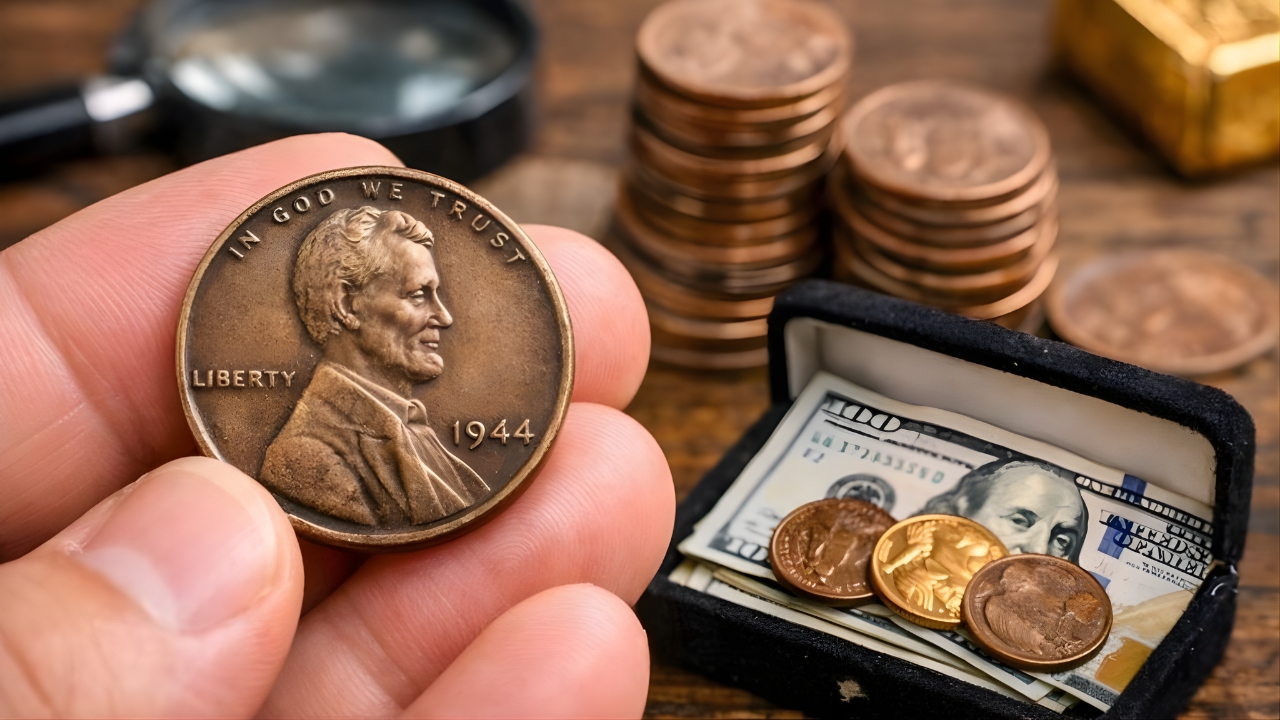
Few stories excite coin collectors more than the discovery of a valuable rarity hiding in plain sight. Recently, news circulated about a Lincoln Wheat Penny reportedly worth $50,000 that was discovered in ordinary loose change. The idea that a simple copper coin could carry such a remarkable value captures the imagination of both seasoned numismatists and everyday people who rarely glance twice at their spare coins. While most pennies are worth only their face value, certain rare dates, mint errors, and unique varieties within the Lincoln Wheat series can command astonishing prices.
The Lincoln Wheat Penny, first introduced in 1909, marked a turning point in American coinage. It was the first circulating U.S. coin to feature the portrait of a real historical figure, President Abraham Lincoln. Designed by Victor David Brenner, the coin’s obverse features Lincoln’s profile, while the reverse showcases two stylized wheat stalks framing the denomination and country name. This classic design remained in circulation until 1958, making it one of the most widely recognized coin series in American history.

Why Some Lincoln Wheat Pennies Are Worth Thousands
The overwhelming majority of Lincoln Wheat Pennies were produced in massive quantities. However, certain coins stand apart due to low mintages, minting mistakes, or unusual production circumstances. When collectors identify a coin that combines rarity with strong condition, its value can rise dramatically.
Several factors determine whether a Lincoln Wheat Penny could reach values like $50,000. The first is rarity. Some years saw limited production numbers, especially at branch mints such as Denver and San Francisco. The second factor is error variety. Coins struck with doubled dies, off-metal planchets, or dramatic minting mistakes often attract significant premiums. Finally, condition plays a crucial role. A coin preserved in near-perfect mint state is far rarer than one that has circulated for decades.
When these elements align, a coin that once represented just one cent can become a prized collector’s item worth tens of thousands of dollars.
The 1943 Copper Penny Legend
One of the most famous examples of a valuable Lincoln Wheat Penny is the 1943 copper cent. During World War II, the U.S. Mint shifted penny production from copper to zinc-coated steel to conserve copper for wartime needs. However, a small number of copper planchets were accidentally used in 1943, resulting in a rare error.
These copper 1943 pennies are among the most celebrated error coins in American numismatics. Authentic examples have sold for substantial sums at auction, sometimes reaching well into six figures depending on condition. While the recent $50,000 discovery may not have been a 1943 copper cent, stories like this fuel the excitement surrounding everyday coin hunting.
The 1909-S VDB Rarity
Another legendary Lincoln Wheat Penny is the 1909-S VDB. When the Lincoln cent debuted in 1909, Brenner’s initials appeared prominently on the reverse. Public criticism led to their removal shortly after production began. As a result, only a limited number of 1909-S VDB coins were struck at the San Francisco Mint before the change.
Today, this coin is a key date in the series. Even in circulated condition, it commands significant premiums. High-grade specimens, especially those with original color and minimal wear, have achieved impressive prices. While most examples do not reach $50,000, top-condition coins can approach or surpass that figure in strong markets.
Double Die Errors That Shocked Collectors
Doubled die errors represent another path to high value. A doubled die occurs when the coin’s design is impressed multiple times on a die during production, slightly misaligned, resulting in visible doubling on the struck coins. The 1955 Doubled Die Obverse is one of the most dramatic examples in the Lincoln Wheat series.

The doubling on the 1955 issue is bold and easily seen with the naked eye, particularly in the date and lettering. Because of its striking appearance and relative scarcity, this variety remains highly sought after. Exceptional examples have sold for tens of thousands of dollars, especially in mint state condition.
Condition: The Silent Multiplier
Even a relatively common date Lincoln Wheat Penny can become valuable if preserved in extraordinary condition. Coins graded at the highest mint state levels often represent only a tiny fraction of the total mintage. Registry set collectors compete for the finest known examples, sometimes pushing prices to surprising heights.
A coin that appears ordinary at first glance might turn out to be a superbly preserved example with blazing original luster and no visible marks. Professional grading services assign numeric grades that significantly influence value. The difference between a coin graded mint state 65 and one graded mint state 67 can mean thousands of dollars in market price.
How the $50,000 Discovery Happened
In many cases, remarkable coin discoveries occur by accident. Someone sorting through inherited collections, counting change from a cash register, or examining coins from a bank roll may notice something unusual. Subtle differences in color, weight, or design details often provide the first clues.
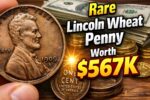
The reported $50,000 Lincoln Wheat Penny was allegedly found during routine handling of loose change. The finder recognized that the coin’s appearance differed from standard pennies. Further examination revealed characteristics consistent with a rare variety. After authentication and grading, collectors confirmed its significance, and its market value reflected that rarity.
Such stories inspire others to take a closer look at their own coins. While finding a $50,000 penny is rare, valuable pieces do continue to surface in unexpected places.
Identifying Potentially Valuable Wheat Pennies
Collectors searching for hidden treasures should begin by examining dates and mint marks. Key dates such as 1909-S, 1914-D, 1922 No D, and 1931-S are known for lower mintages. Errors like doubled dies or off-metal strikes can also signal higher value.
Color is another factor. Lincoln Wheat Pennies are typically classified as red, red-brown, or brown based on their surface appearance. Fully red coins often command higher premiums due to their attractive preservation.
Magnification tools can help reveal small details, including doubling or minting anomalies. However, professional authentication remains essential before assuming significant value. Counterfeits and altered coins exist, particularly for famous rarities.
The Enduring Appeal of the Lincoln Wheat Series
The Lincoln Wheat Penny holds a special place in American collecting culture. Its long production run, historical significance, and wide availability make it accessible to beginners while still offering challenging rarities for advanced collectors.
Stories of valuable discoveries reinforce the idea that history can still be found in everyday life. The possibility that a small copper coin might hold extraordinary value keeps interest alive across generations.
Even as digital transactions become more common, physical coins retain their charm. They connect collectors to the past in a tangible way. The thrill of searching through change for a rare find remains a uniquely satisfying experience.
Final Verdict
The discovery of a $50,000 Lincoln Wheat Penny in loose change serves as a reminder that remarkable treasures can hide in ordinary places. While most Wheat Pennies are worth only a small premium over face value, specific rare dates, dramatic errors, and exceptional condition coins can command impressive sums.
Careful inspection, knowledge of key varieties, and professional authentication are essential steps for anyone hoping to uncover a valuable piece. The next extraordinary discovery may be waiting quietly in a jar of spare coins.
Disclaimer
Coin values fluctuate based on market demand, condition, and authentication standards. The figures mentioned in this article reflect historical sales and collector interest but do not guarantee similar results for every coin. Individuals should seek professional evaluation before buying or selling collectible coins.